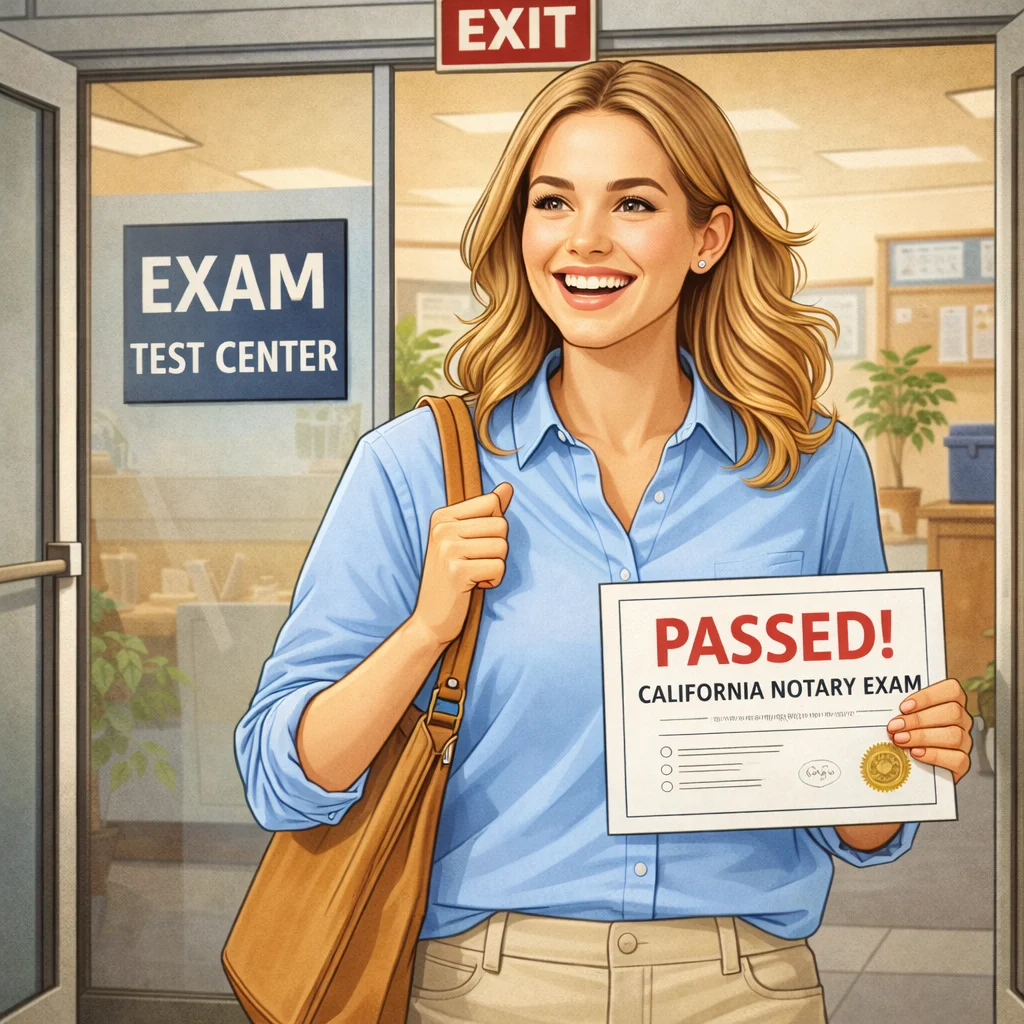
How Practice Tests Help You Build Confidence Before the California Notary Exam
By Notary Course Online
•
October 3, 2025
•
8 min to read
Preparing for the California notary exam can feel challenging for many applicants. The test requires a solid understanding of California notary laws, procedures, and ethical responsibilities. Many learners worry about remembering the details of identification rules, journal requirements, and proper notarial certificates while also managing the time pressure of a timed exam.
While study courses and training materials teach the legal rules notaries must follow, practice tests play a different but equally important role in exam preparation. Practice exams allow you to experience the types of questions you may encounter on the real test and help you apply what you’ve learned in a realistic exam format.
For anyone planning tobecome a notary in California, incorporating practice tests into your study routine can significantly improve your readiness and confidence before exam day.
Quick Summary
Practice tests are one of the most effective tools for preparing for the California notary exam. They help applicants become familiar with exam-style questions, strengthen their understanding of notary laws, and improve time management skills. By simulating real testing conditions and reinforcing key legal concepts, practice exams help reduce anxiety and build the confidence needed to perform well on test day.
Key Takeaways
Practice tests simulate real California notary exam questions and scenarios.
They help identify weak areas in your knowledge before taking the exam.
Answering practice questions improves memory through active recall.
Timed practice tests help you develop better exam pacing.
Reviewing practice test answers reinforces important notary laws and procedures.
Why Practice Tests Are Important for California Notary Exam Preparation
A strong study plan is essential when preparing for the California notary exam, but practice tests provide an additional level of preparation that traditional study materials cannot offer.
Connecting Study Material to Real Exam Questions
Courses and study guides explain the responsibilities and legal rules governing California notaries. Practice tests help you apply those rules in the way they appear on exam questions. This shift from passive studying to active testing helps you better understand how the law is presented in real exam scenarios.
Becoming Comfortable With the Exam Structure
The California notary exam consists of multiple-choice questions that often present practical situations involving notarial acts. Practice tests help you become familiar with this structure, so the exam format feels natural rather than unfamiliar.
This familiarity allows you to focus on the questions themselves rather than adjusting to the format.
How Practice Tests Build Confidence Before the Exam
Confidence is one of the most important factors influencing exam performance.
Reducing Test Anxiety
Many applicants experience test anxiety because they are unsure what to expect. Practice tests help remove that uncertainty by exposing you to exam-style questions in advance. The more familiar the testing format becomes, the more comfortable you will feel when sitting for the real exam.
Simulating Real Exam Conditions
A well-designedCalifornia notary practice test mirrors the structure of the actual exam. Taking these tests under timed conditions can help you mentally prepare for the real testing environment while reinforcing your knowledge of notary laws.
Key Benefits of Using Notary Practice Tests
Practice exams offer several advantages that go beyond simple review.
Identify Knowledge Gaps Early
One of the biggest benefits of practice tests is the ability to quickly identify weak areas in your knowledge. If you miss questions about identification procedures or journal recordkeeping, you will know which topics require additional review.
Improve Time Management
Because the California notary exam is timed, learning how to pace yourself is essential. Practice tests help you determine how much time you should spend on each question and how to maintain a steady pace throughout the exam.
Develop Strong Test-Taking Skills
Practice tests also help you develop useful strategies, such as carefully reading each question and eliminating incorrect answer choices before selecting the best response.
Real Notary Topics Reinforced by Practice Tests
Practice tests typically include questions that reflect the real legal responsibilities of a California notary public.
Common topics reinforced by practice exams include:
Acceptable identification documents for notarization
Proper procedures for recording notarizations in a journal
The difference between acknowledgments and jurats
Maximum fees a California notary may charge
Prohibited acts for notaries
Administering oaths and affirmations
Handling incomplete or incorrect documents
These legal standards are established by the California Secretary of State, who regulates notaries throughout the state.
If you are just beginning your notary journey, reviewing the fullsteps to become a California notary can also help you understand how exam preparation fits into the overall certification process.
How to Use Practice Tests Effectively
Practice tests provide the greatest benefit when used strategically during your study process.
Take Practice Tests Throughout Your Study Plan
Instead of waiting until the last minute, take practice tests at different stages of your preparation. An early practice test can establish your starting point, while later tests help measure your progress.
Review Every Incorrect Answer
The most valuable learning often happens when reviewing incorrect answers. Understanding why an answer was wrong helps reinforce the correct rule and prevents repeating the same mistake on the real exam.
Combine Practice Tests With Study Courses
Practice exams should complement your training materials rather than replace them. Combining practice tests with study guides, review sessions, and course materials creates a balanced and effective preparation strategy.
Signs You Are Ready for the California Notary Exam
Pass California Notary Exam
You may be ready to take the exam if:
You consistently score 80% or higher on practice tests
You understand identification requirements and journal procedures
You can complete practice tests within the allotted time
You feel comfortable answering legal scenario questions
These indicators suggest you have developed both the knowledge and confidence needed for exam day.
Creating a Balanced Notary Exam Study Plan
Practice tests are most effective when they are part of a broader study strategy.
How Many Practice Tests Should You Take?
Many applicants benefit from taking three to five practice exams during their preparation period. This allows you to measure improvement while building familiarity with exam questions.
Combine Multiple Study Methods
A well-rounded study plan may include:
Reading course materials
Taking practice exams
Reviewing missed questions
Using flashcards for key legal rules
Track Your Progress
Recording your practice test scores helps you monitor improvement over time and identify topics that still require additional study.
Passing the California notary exam requires both knowledge and confidence. While study materials teach the legal rules and responsibilities of a notary, practice tests prepare you to apply that knowledge under real exam conditions.
By taking practice tests regularly, you can identify weak areas, strengthen your understanding of notary laws, and improve your ability to manage time during the exam.
Consistent practice transforms uncertainty into confidence.
Notary practice tests often include questions based on the actual laws governing California notaries. These rules cover topics such as acceptable identification, journal requirements, notarial certificates, and prohibited acts. These legal standards are established and regulated by the California Secretary of State Notary Public Division, which oversees notary commissions and provides official guidance for notaries across the state.
FAQs About Notary Practice Tests
How do practice tests help you prepare for the notary exam?
Practice tests help applicants become familiar with the structure and style of exam questions. They also help reinforce important legal concepts and allow learners to practice answering questions under timed conditions.
When should you start taking notary practice tests?
It is helpful to begin taking practice tests early in your study process. Early tests establish a baseline, while later tests help measure improvement and readiness for the real exam.
How many practice tests should you take before the notary exam?
Many applicants benefit from taking several practice exams during their preparation. Taking multiple tests helps build familiarity with exam questions and strengthens confidence.
Should you review answers after taking a practice test?
Yes. Reviewing answers is one of the most valuable parts of a practice test. Understanding why answers are correct or incorrect helps reinforce the legal rules that will appear on the real exam.
What are the main benefits of notary practice tests?
Practice tests help reduce exam anxiety, identify weak areas, improve time management, and reinforce key notary laws before the real exam.
Do practice tests use real exam questions?
Practice tests are designed to reflect the format and style of the California notary exam, helping applicants become familiar with the types of questions they may encounter.
Are practice tests enough to pass the notary exam?
Practice tests are a powerful preparation tool, but they work best when combined with study courses, review materials, and structured learning.
What should you do after completing a practice test?
Review every answer, especially incorrect ones, and revisit the legal concepts behind those questions.
Can practice tests reduce exam anxiety?
Yes. Repeated exposure to exam-style questions makes the testing format familiar, which helps reduce stress and build confidence.
Share
Discover more insights and tips in the Notary Course Online Blog
State-approved California notary classes are essential for individuals who need to become a notary public in California or renew their notary commission. Classes for notaries public are designed to provide the knowledge and skills required to perform notarial acts in compliance with California Law and regulations. Before choosing a notary class, make sure that the […]
Becoming a notary public can provide a valuable professional credential, create opportunities for additional income, and allow you to offer an important service within your community. However, the process is not the same in every state. If you want to become a notary public in California, you will need to complete approved education, pass a […]
Notaries public need notary supplies to perform their professional duties on the regular basis. Not only are notary supplies helpful to ensure the authenticity and legality of the notarized documents, but they’re also necessary to meet the state law requirements that apply to notaries public. In California, there are both mandatory and optional notary public […]
 Free shipping on supplies orders over $70.00