Notarial Certificate Differences
By Notary Course Online
•
September 7, 2025
•
4 min to read
The Most Common Notarial Certificate: The Acknowledgment
Very rarely does a day go by that I am not issuing an acknowledgment when working as a notary public. This most basic and common notarial act confirms the signer’s identity and willingness to sign a document. The notarization does not make a document legal. Even when the signature occurs outside the notary’s presence, as long as the signer confirms they signed it and the signature matches that on their identification documents, the acknowledgment can be issued. All of these steps are crucial for fraud deterrence.
When an acknowledgment is properly issued, the signed document takes on a legally enforceable nature, especially when it involves a financial or property matter. California notaries public may complete an acknowledgment as required by another state, so long as it does not require the notary to certify or determine that the signer holds a particular representative capacity or to make other determinations or certifications not allowed by California law.
For instance, a commercial loan package for an Arkansas property may be signed in Orange County, California, with a certificate of acknowledgment pre-printed with “John Smith, CEO of ABC Corp.” The best practice would be to write “See Attached Loose Certificate” and replace it with a California-compliant certificate of acknowledgment showing only the signer’s name.
Even if the out-of-state acknowledgment matches California’s standard verbiage and you plan to use it for your notarization, ensure that the California disclaimer box is present. If the disclaimer is missing, you can either attach a loose certificate of acknowledgment or add the disclaimer using a custom-made disclaimer stamp.
Sworn Statements Almost Always Require a Jurat
Jurats are typically required when a document signer is making a sworn statement that the contents or stipulations of a document are true and correct. The key words to look for are “signed and sworn” just before the signer’s signature line. Even if the signer is familiar with the documents being notarized, it is imperative that they make the verbal oath or affirmation and sign the document in the notary’s presence.
If the signer has already completed all their required signatures before the notary appointment, any document with a jurat following the signature must be signed again, and the oath or affirmation must be administered by the notary. The main difference between an acknowledgment and a jurat is that a jurat holds the signer legally accountable for the truthfulness of a document’s contents under penalty of perjury.
Copy Certification: The Most Limited Act for a California Notary Public
The certification of a copy of a document is something that no California notary public can perform—unless the document is a Power of Attorney. This type of service has its own unique notarial certificate: the California Copy Certification of Power of Attorney.
With this certificate, after inspection of both the original signed Power of Attorney and its copy, the notary public signs the notarial certificate and affixes the notarial seal. Despite frequent requests from customers to certify copies of passports, driver’s licenses, birth certificates, marriage certificates, contracts, or other documents, the Power of Attorney is the only document copy that a California notary public can certify.
I have often been asked by potential customers to “please just put your stamp on this copy,” and my response is always, “I’m sorry, but no can do.”
In these cases, I advise customers that certain vital record copies can only be obtained from the government entity that issued them. If it’s not a vital record, the customer can prepare an affidavit in which the signer swears that the copy is a true, correct, and complete photocopy of an original document.
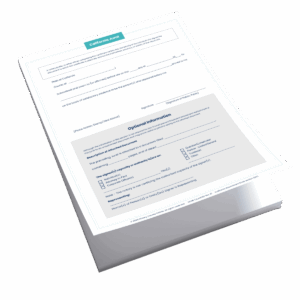
The form known as the California Copy Certification by Document Custodian is readily available for customers to print themselves and bring to a notary public, along with the original and copy documents. Much like the Power of Attorney copy certification, this form requires the document holder to make a sworn statement that the copy is true, and to sign the form while the notary completes the attached jurat.
 Free shipping on supplies orders over $70.00