How To Avoid Notary Fraud And Scammers
By Carin Guertin
•
August 29, 2025
•
6 min to read
Acting like a “pro” in your job every time.
California notaries public are tasked, first and foremost, with preventing fraud on important signed documents. And of course, this means going through that all-important checklist when you meet with your signer – no matter if it’s the first meeting of the fiftieth. Whether it’s an Acknowledgment or a Jurat, each step required for the notarization is laid out in the certificates.
Proper identification of the signer currently appearing before the notary is critical. When a signer forgets their ID or leaves it in their vehicle, be sure to remain professional and explain that, without the ability to properly identify the signer, the notarization cannot take place. Knowing the different types of acceptable evidence for identification can help you offer helpful solutions to a signer who lacks identification.
And being a pro means you consistently follow the rules of personal appearance of a signer who has satisfactory evidence of their identity. If the signer is not present with the notary public, how else will they sign the notarial journal and leave their thumbprint if required? Imposters, on the other hand, may try to present a false or expired identification document. Be sure you are aware of what to look for in the most common IDs used in California – typically DMV driver’s licenses, DMV senior identification cards, and US passports.
Being thorough in reviewing the identification and how it matches the name on the document to be signed not only shows your professionalism and how seriously you take your job, but also allows time for any inconsistencies with your signer or document to come to light.
A new client asked me to notarize a document at their office. When I arrived, the signed document and the signer’s ID were on the conference room table, but no signer was there. The receptionist asked me to just get the document notarized, and they would pay me and validate my parking. I declined and said I would wait for the signer to come back. Five minutes later, we got the notarization completed – and this client called me back several times because of my “pro” service.
Making sure your employer is playing by the rules of the notary.
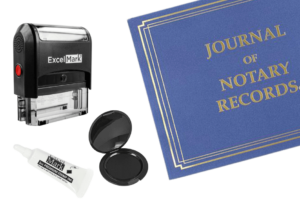
Even if a notary public had all their classes, commission, and supplies expenses paid for by their employer, the notary still must maintain exclusive control over their journal and seal. An employer cannot demand dual access to the notary tools without the notary public employee being present. Even if it will save time, don’t ever leave your journal or seal in someone else’s office while you work on something else.
Even if another coworker says, “It’s the way we have always done it here,” don’t be taken advantage of and lower your professional standards. If need be, have a private conversation with your boss or office team and explain why it’s so important that only the notary has access to the journal and seal. These items are never company property – only one person’s name is on the notarial seal. If multiple parties have access to the notarial tools at the workplace, it could increase the risk that someone misuses the seal to notarize a document that could harm your business or you, criminally or financially.
The notarial journal also contains all sorts of private, personal information, including document titles, trust information, ID expiration dates, and addresses… you name it. So, a notary is also exposing the public to the risk of fraud and identity theft if the journal is not kept under the notary public’s exclusive control at all times. Privacy guard pages inside the journal to cover up previous notarization details are also a great tool against potential theft of personal information.
Don’t submit to public pressure if the documents or situation don’t “seem right”.
Almost every client and customer I meet is genuine and simply needs my expertise in notarization for a legitimate purpose. But there have been some characters that have tried to manipulate my good services. I arrived at a notary office for an appointment and was informed they “are in a hurry & still printing the 100-page contract – can you just notarize the signature pages?” No can do; this would be considered an incomplete document, and therefore, notarization would need to be refused.
Caretakers of older signers may try to get documents signed for financial benefit. If the signer seems concerned or confused about why they need to meet with a notary, ask the signer some straight-up questions as to how they feel about signing the documents and their relationship with the caretaker. Both the notary and the signer could be taken advantage of in these situations. Making sure you know that “proofs of execution” are a little complicated and extremely limited for their use will help the professional notary stay one step ahead of potential scammers. “Proofs” cannot be used on Powers of Attorney or almost all real estate documents.
Don’t let fraudsters try to talk you into an illegal situation when they claim to know the law or try to confuse the notary. Almost always, when someone says they are in a hurry, it means they are trying to pull a fast one. Idle chit-chat and other distracting behavior could indicate that the signer is trying to distract the notary public on purpose. Sure, it’s polite to be pleasant, but once the documents for notarization are presented, it’s time to get down to business.
The occasional acquaintance or neighbor may recall that they “know” a notary public and ask for favors or guidance on documents they need to process. Just remember that for the notary public, the work is not just occasional – this is your job. As long as you follow your proper notarial procedures each and every time, your notarizations will be “by the book”. Sometimes the public needs a little education as well on the ins & outs of the notarial procedures, and notaries have plenty of resources to rely on. But if a sketchy situation arises and you stick to your principles, you won’t have to worry that your notary commission and good name are at risk.
 Free shipping on supplies orders over $70.00