California
Blog
Year-End Checklist for Notarial Records

-
by Robert Long
- March 4, 2026
A Practical Compliance & Business Reset Guide for Notaries Public
As the year ends, notaries have an important job: making sure their records are complete, compliant, and ready for any audit. Doing a careful year-end review helps protect your commission, boosts your professionalism, and sets your business up for a smoother, more successful year.
This checklist guides you step-by-step through journal checks, tax prep, supply reviews, and digital security with clear, practical advice. Whether you’re an experienced notary maintaining your commission or someone who recently decided to become a notary, building strong record-keeping habits is one of the best ways to protect your business.
1. Journal Compliance & Calendar Reconciliation
Your notary journal is a legal record. Being accurate isn’t optional; it’s essential.
The end of the year is a great time to compare your appointment calendar with your notary journal to make sure every notarization is recorded correctly.
✔ Verify Every Journal Entry Is Complete
Each entry should include:
- Date of notarization
- Time of notarization
- Fee charged
- Method of payment
- Character/type of document
- Document date
- Notarial act performed
- Signer’s name (as shown on identification)
- Signer’s signature
- Thumbprint (if required in your state)
Even small missing details can cause issues if the Secretary of State or a former client asks to see your records.
✔ Address Skipped or Unused Lines Properly
Sometimes, sequential journals leave one unused line at the bottom of a page. If your next appointment needs several entries, don’t leave that single line blank.
Here’s the best way to handle it:
- Draw a line through the entire unused space.
- Write a brief note explaining why the line was not used.
- Add the date and your initials.
This stops anyone from adding entries without permission and clears up any confusion.
✔ Reconcile With Your Calendar
Compare your:
- Appointment calendar
- Client confirmations
- Invoices
- Journal entries
This double-check helps with two things:
- Ensures no notarization was omitted from your journal
- Confirms you didn’t miss invoicing income
Missing entries can cause compliance problems, and missing invoices mean lost income.
✔ Confirm Payment Recording
Review each entry and verify that:
- The fee is recorded correctly.
- Payment method is documented.
- Deposits match your bank records.
This step makes tax preparation much easier.
✔ Delete Electronic Loan Package Copies
If you operate as a Notary Signing Agent and scan back loan or trust packages:
- Confirm all electronic copies have been deleted.
- Empty your computer’s recycle/trash folder.
- Ensure no Personal Private Information (PPI) remains on your hard drive.
Data security isn’t just good practice; it’s key to keeping your clients’ trust.
2. Tax Preparation & Financial Reconciliation
Year-end accounting is much easier if you do monthly reconciliations. December is the time to make sure everything matches up.
✔ Gather Required Documents
Prepare:
- All invoices (electronic or paper)
- All receipts (supplies, mileage logs, parking/valet tickets)
- Credit card statements
- Bank statements (especially if you maintain a separate business account)
- Proof of training, certifications, or annual membership dues
If you received more than $600 from a client during the year, expect a Form 1099 from them.
For notaries nearing the end of their commission term, this is also a good time to review your renewal timeline and begin preparing to renew your notary commission so there is no interruption in your ability to work.
✔ Review Large Business Purchases
Check your calendar for:
- Equipment purchases
- Training programs
- Conferences
- Commission renewals
- Insurance payments
Cross-reference those against your accounting system to ensure nothing was missed.
✔ Organize Receipts Securely
Even if digitized:
- Keep physical receipts securely stored.
- Ensure scanned copies are readable.
- Back up electronic accounting files.
If you don’t have a tax professional, try to find one who understands small service businesses. Many networking groups can help with referrals or discounts.
3. Supplies Inventory & Equipment Check
Being prepared with your supplies affects how professional and efficient you are.
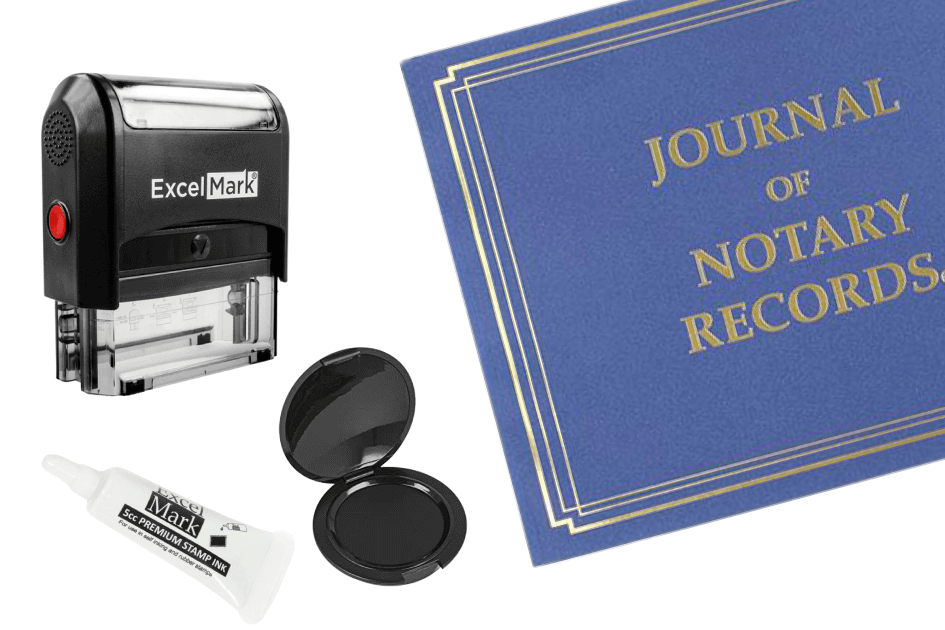
✔ Inspect Your Notary Seal
- Make test impressions
- Ensure the imprint is dark and clear.
- Replace ink trays if drying.
- Inspect the rubber plate for cracking or warping.
A seal that doesn’t make a clear impression can make a notarization invalid.
✔ Check Thumbprint Pads
- Verify ink levels
- Replace if dried out.
- Ensure prints are clear and legible.
✔ Prepare Your Next Journal
If you are midway through your current journal:
- Purchase the next one in advance.
- Store it securely
- Confirm it meets state compliance requirements.
Running out without warning can interrupt your work. Many notaries keep a backup journal and other professional notary supplies on hand to be prepared for appointments.
✔ Audit Business Supplies
Review inventory of:
- Business cards
- Pens
- Thank-you cards
- Envelopes
- Shipping supplies
Buying too many ties up money, while buying too few slows you down.
4. Website & Digital Presence Audit
Your website is usually the first thing people see.
Perform a quick digital audit:
- Test all contact forms.
- Confirm phone numbers and email addresses are accurate.
- Check for broken links.
- Update testimonials and service descriptions
- Review pricing disclosures
- Ensure commission expiration date is current.
Outdated information can undermine trust and cost you potential clients.
If you’re planning to grow your notary business in the coming year, it may also be worth reviewing your professional credentials and training. Many notaries revisit the steps to become a notary to make sure they remain compliant with evolving state requirements or to expand their services.
5. Optional: Strategic Business Reset for the New Year
Even though it’s not about compliance, year-end is a great time to:
- Review pricing structure
- Identify the highest-paying clients
- Evaluate which services were most profitable
- Update service agreements
- Plan continuing education
Small improvements add up over time.
Quick Year-End Notary Checklist (Summary)
Journal & Compliance
- All entries complete
- Skipped lines properly struck out
- Calendar reconciled
- Payments recorded accurately
- Electronic loan copies deleted
Tax Prep
- 1099s expected and tracked
- Receipts organized
- Invoices reconciled
- Statements reviewed
- Large purchases verified
Supplies
- Seal tested
- Ink replaced if needed
- Thumbprint pad checked
- Next journal secured
- Business supplies inventoried
Digital
- Website tested
- Messaging working
- Information updated
- Broken links fixed
Final Thought
Being a notary means being careful and professional. A thorough year-end review not only protects your commission but also strengthens your reputation.
Notaries who build lasting businesses handle compliance and operations as carefully as they handle each notarization. Whether you’re maintaining an established practice or just starting your journey to becoming a notary, strong organization and regular reviews will help you build a reliable and trusted service.
Frequently Asked Questions
Do notaries need to reconcile their journal at the end of the year?
While not always legally required, reconciling your notary journal with your appointment calendar at year-end is a best practice. It helps ensure all notarizations are properly recorded, fees are documented, and no entries are missed, reducing compliance risk.
What should be included in a notary journal entry?
A complete notary journal entry typically includes the date and time of notarization, type of document, notarial act performed, signer’s name as shown on identification, fee charged, payment method, signature, and thumbprint if required by state law.
How long should a notary keep their journal records?
Record retention requirements vary by state. Some states require journals to be kept for several years after the last entry, while others require surrendering journals to the county clerk or Secretary of State upon commission termination. Always verify your specific state regulations.
Should notary signing agents delete scanned loan documents?
Yes. If you scan or temporarily store loan or trust documents, all electronic copies containing Personal Private Information (PPI) should be securely deleted once no longer needed. Be sure to also empty your recycle or trash folder to protect client confidentiality.
Can notaries deduct business expenses on their taxes?
Notaries who operate as independent contractors may be able to deduct ordinary and necessary business expenses, such as supplies, training, mileage, and insurance. It’s recommended to consult a qualified tax professional for guidance specific to your situation.
Discover more


Discover more insights and tips in the Notary Course Online Blog

Notarial Journal Management
Your journal needs to be as detailed as required. The California Secretary of State’s all-important...

What Is the Difference Between a Notary Public and a Notary Signing Agent?
A notary public provides general notarization services, such as verifying identity, witnessing signatures, and helping...
Year-End Checklist for Notarial Records
A Practical Compliance & Business Reset Guide for Notaries Public As the year ends, notaries...
 Congratulations!